Uncategorized

Emotional Well-being in Infants, Toddlers, and Young Children — A Parent’s Perspective

Author: Priyanka Gupta Kankane (IIM Lucknow, BITS Goa, Microsoft) Understanding emotional needs of young children Ages 0–6 monthsAt this stage, a child has very basic needs: food, sleep, freedom from pain or physical discomfort, and closeness to a caring and loving adult (biologically, often the mother). When these needs are consistently met, the child tends to thrive and progress healthily. What matters greatly at this stage is the emotional well-being and physical health of the primary caregiver, most often the mother. Postpartum depression (PPD), delivery-related challenges, or feeding difficulties can make the mother emotionally vulnerable, which may, in turn, affect the infant. A calm, supported, and emotionally secure mother helps the child feel safe and protected. Additionally, a peaceful and nurturing home environment contributes significantly to the infant’s sense of safety. Ages 6 months–2 yearsDuring this period, children begin to recognise familiar faces, toys, and environments. They also typically begin their transition to solid foods. Experiences such as prolonged crying (sometimes suggested in certain sleep-training approaches), exposure to shouting, loud noises, or darkness can create stress for young children and are best minimised. Beyond their primary needs, children now require playtime, connection with caregivers, and joyful interactions filled with laughter and engagement. At this stage, emotional development is still emerging, and children often mirror what they observe. Therefore, creating a warm, positive, and emotionally stable home environment is essential. Caregivers’ behaviour—being calm, playful, and responsive—plays a key role. Limiting exposure to conflict, distress, or negativity in the household supports the child’s emotional well-being. Ages 2–4 yearsAs toddlers transition into early childhood, they begin to enjoy social interactions with other children and engage more in activities outside the home, such as playgroups or play areas. Many children also start preschool or daycare, marking an important milestone in their emotional development. Although language skills develop rapidly, children at this stage are still learning to process and express their emotions. This often results in tantrums and emotional outbursts—commonly referred to as the “terrible twos” or “threes.” This is also a critical phase for developing emotional co-regulation. Children rely on caregivers to model how to manage strong emotions such as anger, frustration, sadness, and disappointment. They are keen observers and tend to imitate adult behaviour. If they witness shouting, aggression, or impulsive reactions, they may adopt similar patterns. Conversely, when they see adults pausing, taking deep breaths, expressing feelings verbally, or calming themselves in healthy ways, they learn that emotions can be managed safely. These lessons extend far beyond childhood and form the foundation of lifelong emotional health. It is equally important to set clear boundaries—for example, reinforcing that hitting or harming oneself is not acceptable—while encouraging safe emotional expression. Ages 4–6 yearsAs children grow more independent and spend increasing amounts of time at school, in play, and with peers, their emotional well-being begins to be influenced not only by caregivers but also by their social environment. Parents can support this stage by being aware of their child’s friendships, teachers, and broader social interactions. While children continue to learn emotional regulation from adults, they gradually become more predictable in their responses. If guided well, the frequency of intense tantrums and physical outbursts tends to decrease. Communication and reasoning improve significantly at this stage; however, children are still too young to manage strong emotions independently. The role of caregivers remains crucial in helping them understand, express, and regulate their feelings in healthy and constructive ways. If you would like to contribute to our newsletter, or join us as parent researcher or educator, please leave us a message, or write to priyanka.pointguard@gmail.com Follow Priyanka Agrawal on LinkedIn: http://www.linkedin.com/comm/mynetwork/discovery-see-all?usecase=PEOPLE_FOLLOWS&followMember=pagrawal1 Subscribe to Point Guard’s newsletter: https://www.linkedin.com/build-relation/newsletter-follow?entityUrn=7418911870050488320 Leave feedback in comments section.

Emotional Well-being in Infants, Toddlers, and Young Children — A Parent’s Perspective Read More »

Exposing Young Children to Indian Mythology and Spiritual Stories, and Their Impact

Author: Priyanka Gupta Kankane (IIM Lucknow, BITS Goa, Microsoft) Exposing Young Children to Indian Mythology and Spiritual Stories, and Their Impact “The earliest memories I have of watching content from my childhood are of watching Ramayan, Mahabharat, or Krishna on television while sitting with my grandparents, neighbours, and friends.”Does this sound relatable? The entire generation of the 1980s and 1990s—Gen Y, Millennials, and even parts of Gen Z—can still remember the music of these serials, their characters, the advertisement breaks on Doordarshan, and the excitement of waiting for the next episode on a calm Sunday morning. Over the past couple of decades, however, not only has media and content changed, but our exposure to these stories has gradually reduced. This reflection is not about religion or the worship of God. Rather, it is about stories—stories that shape generations, inspire us, and encourage deeper reflection on our own lives while imparting lessons about ethics, values, and dharma, regardless of the religion they originate from. These were stories not designed for ratings or consumerism, but rooted in philosophy, reflection, and humanity. Recently, I gifted a collection of stories from Amar Chitra Katha to a friend’s child. A few days later, the parent told me that the child had become completely absorbed in the stories, asking to hear them repeatedly and even attempting to role-play the characters at home. In a world filled with fast-paced digital entertainment like Cocomelon, this moment felt deeply meaningful for the parents. Their child was engaging with role models and stories that they themselves had grown up with—stories that were both relatable and inspiring. But why does storytelling matter so much in an age dominated by media and modern forms of content consumption? Stories serve as a bridge between generations, societies, and cultures. They nurture imagination in ways that few activities can match, and they provide children with opportunities to understand expression and communication through artistic traditions such as lok kathas, Panchatantra, Akbar–Birbal, Tenali Raman, and many others across different regions and languages. While many of these stories are now available through television serials and cartoons, one might ask: why focus on the written format? The answer is simple. Reading helps cultivate a love for books. It offers a screen-free experience with fewer distractions—just focused time, often spent with a parent or grandparent reading aloud to a young child. Another important aspect of storytelling is the development of listening, processing, imagining, and eventually applying lessons in real life. For example, values such as honesty, truthfulness, kindness, and healthy habits can often be conveyed more effectively through stories of wisdom than through direct instruction. At a time when children’s attention spans are increasingly challenged by screens, redirecting their attention to meaningful stories can be both beneficial and enriching. Stories also introduce children to native history and cultural traditions while being rooted in deep values and virtues. This exposure becomes especially important as many families today no longer live in joint family systems where such narratives would naturally emerge through conversations with grandparents. Stories can help recreate that connection to cultural roots and provide children with a sense of belonging—something the modern world often struggles to cultivate. Another perspective frequently shared by young urban parents is the challenge of raising children who are modern and confident while also remaining grounded in their cultural heritage. Mythological and spiritual stories often include a moral or learning element—shiksha or seekh—that encourages children to reflect on right and wrong and to internalise positive behaviours and habits. With these thoughts, let us open up a conversation:Which storybooks would you recommend to parents—across different age groups and languages—based on your personal experiences and reviews? If you would like to contribute to our newsletter, or join us as parent researcher or educator, please leave us a message, or write to priyanka.pointguard@gmail.com Follow Priyanka Agrawal on LinkedIn: http://www.linkedin.com/comm/mynetwork/discovery-see-all?usecase=PEOPLE_FOLLOWS&followMember=pagrawal1 Subscribe to Point Guard’s newsletter: https://www.linkedin.com/build-relation/newsletter-follow?entityUrn=7418911870050488320 Leave feedback in comments section.

Exposing Young Children to Indian Mythology and Spiritual Stories, and Their Impact Read More »

When AI Takes Over Most Jobs: The Core Knowledge & Skills People Will Still Need

When AI Takes Over Most Jobs: The Core Knowledge & Skills People Will Still Need

Artificial Intelligence is no longer a futuristic concept. As AI systems become more capable, efficient, and scalable, many traditional roles across corporations will either disappear or dramatically transform. If you would like to contribute to our newsletter, or join us as parent researcher or educator, please leave us a message, or write to priyanka.pointguard@gmail.com Artificial Intelligence is no longer a futuristic concept. It is automating workflows, generating content, analysing data, writing code, diagnosing diseases, and even making strategic recommendations. As AI systems become more capable, efficient, and scalable, many traditional roles across corporations will either disappear or dramatically transform. What will remain uniquely human, and therefore valuable, in an AI-dominated world? The answer lies not in technical tricks alone, but in deeper cognitive, emotional, ethical, and societal capabilities. Below are the core knowledge areas and skills that will matter most. First-Principles Thinking AI can instantly generate polished answers, hence surface-level knowledge becomes cheap. What becomes rare is the ability to think independently. First-principles thinking involves breaking problems down to their fundamental truths and reasoning upward from there. It requires questioning assumptions, challenging popular narratives, and understanding root causes rather than accepting patterns at face value. AI can recombine existing information. Humans must decide which problems are worth solving and how to define them correctly. Those who can think from first principles will guide AI rather than compete with it. Emotional Intelligence and Human Sensitivity AI can simulate empathy in text and speech, but it cannot truly experience emotion, vulnerability, or trust. As workplaces become increasingly automated, emotional intelligence will become a defining advantage. Skills such as deep listening, emotional regulation, conflict resolution, and trust-building will be central to leadership and collaboration. Organizations will need individuals who can manage tension, navigate interpersonal complexity, and create psychological safety in teams. Machines optimise for efficiency. Humans sustain relationships and belonging. Leadership skills will be in demand. Cognitive Flexibility and Adaptability The pace of change will only accelerate. Entire industries may transform within years. Static expertise will lose value faster than ever before. What will matter is the ability to unlearn, relearn, and adapt across domains. Cognitive flexibility allows individuals to shift domains, update knowledge, and integrate new information without psychological resistance. In the AI era, meta-learning, the ability to learn how to learn, will be more powerful than any single degree or certification. Certifications will still bring your network, credibility, and skillsets. Systems Thinking AI often optimises specific tasks or segments of a process. Humans must understand interconnected systems. Economic decisions influence technological innovation. Psychology influences culture. Policy shapes markets and consumer behaviour. Education impacts national competitiveness. Defense impacts sovereignty. Systems thinking enables individuals to see relationships, feedback loops, and long-term consequences rather than isolated outcomes. Leaders who can understand whole systems will make better strategic decisions in complex environments. Ethical Judgment and Moral Reasoning As AI systems gain influence, ethical responsibility becomes even more critical. Just because something can be automated does not mean it should be. Questions about fairness, bias, privacy, employment displacement, and long-term societal consequences cannot be delegated to algorithms. AI can compute probabilities and optimise outcomes. It cannot carry moral accountability. Humans must provide ethical frameworks and long-term judgment. In the future, one must expect ethical clarity to be as important as technical competence. Creativity Beyond Pattern Recognition AI is trained on historical data, which makes it exceptionally good at identifying patterns and generating variations. However, breakthrough innovation often requires cross-domain thinking, emotional intuition, aesthetic judgment, and cultural nuances. Creativity will shift from producing raw output to directing meaning, framing narratives, and setting vision. The future will reward creative directors, conceptual thinkers, and integrators more than routine developers. Communication, Narrative, and Influence As information becomes abundant and easily generated, the ability to move people becomes more valuable. Communication will not simply mean presenting facts. It will involve storytelling, framing ideas, building communities, and aligning diverse stakeholders. AI can produce reports and presentations. Humans must inspire action, create shared meaning, and lead through uncertainty. Influence grounded in authenticity and trust will remain deeply human. Self-Regulation and Psychological Stability An AI-driven world will bring instability in job identities, career paths, and economic structures. Comparison pressures may intensify as productivity becomes augmented. Without strong self-regulation, anxiety and burnout will rise. The ability to manage emotions, tolerate uncertainty, detach self-worth from job titles, and maintain inner stability will become an economic advantage. Psychological resilience will no longer be optional; it will be foundational. AI Literacy and Intelligent Collaboration Understanding AI does not necessarily mean coding neural networks. It means knowing what AI can and cannot do, recognising its limitations, understanding how bias enters systems, and using it effectively as a tool. Those who collaborate intelligently with AI will outperform those who ignore it or fear it. AI will become a multiplier. Human insight, depth of knowledge, and judgment will remain the driver. Deep Understanding of People, Societies, and Cultures Technology scales globally, but human societies operate through culture, identity, and history. AI can analyse behavioural data, but it does not live within social norms or understand unspoken cultural dynamics. Future leaders will need cultural intelligence, the ability to interpret social context, anticipate collective reactions, understand power structures, and adapt strategies for each community. A business model or message that succeeds in one region may fail in another due to cultural nuance. Societies are emotional ecosystems shaped by history, economics, politics, and shared identity. Those who understand people at this level will be indispensable in new discoveries, inventions, and innovations. Awareness of Emerging Industries and New Technologies While many existing roles may shrink, entirely new industries and domains will emerge. History shows that technological revolutions do not only destroy jobs, they create new categories of opportunity. The coming decades are likely to see rapid expansion in areas such as: The most future-ready individuals will not only adapt within old systems; they will position themselves where growth is happening. This requires curiosity, technological awareness, interdisciplinary learning, and the ability to spot emerging patterns

When AI Takes Over Most Jobs: The Core Knowledge & Skills People Will Still Need Read More »

For parents with tight budgets, navigating limited options, strong opinions, and visible-output pressure

Choosing the Right Local Playschool in Tier-I/II/III Cities: What Really Matters

For parents with tight budgets, navigating limited options, strong opinions, and visible-output pressure If you would like to contribute to our newsletter, or join us as parent researcher or educator, please leave us a message, or write to priyanka.pointguard@gmail.com In Tier I, Tier-II and Tier-III cities, the challenge is misplaced priorities. English obsession, early writing, discipline-first mindsets, and owner-driven schools are common. Here’s how to choose well within real constraints. 1. Don’t Equate English or Writing With Quality Common red flags: Why this happens: Visible output reassures anxious parents. What to ask instead: “How do you build language, hand strength, and confidence?” Good schools talk about conversation, play, stories, and motor skills, and not homework. 2. Teachers Over Facilities, Always In smaller cities, infrastructure may be modest. That’s okay. What’s not okay: Green flags Even if the English isn’t polished, the thinking should be. 3. Watch How Discipline Is Handled Red flags: Healthy classrooms: At preschool age, obedience should never come at the cost of curiosity. 4. Helpers Are Support, Not Substitutes Ayahs are valuable, especially for toileting and feeding. But watch for: Children should look to teachers, not helpers, for emotional safety. 5. Hygiene Is About Habits, Not Money Even modest schools can do this well. Check for: Cleanliness routines matter more than fancy infrastructure. 6. Settling-In Is Where Many Schools Fail Major red flags: Strong schools: This is especially important for first-time schoolers. 7. Look for Hidden Green Flags in Ordinary Schools Some of the best Tier-2/3 playschools look unimpressive outside. Watch for: If your own nervous system relaxes there, your child’s probably will too. 8. Be Mindful of Parent Shaming & Authority Culture Red flags: Good schools respect parental insight, even when disagreeing. A Tier-2/3 Reality Check You may not find global curriculum, fancy toys, perfect systems But you must insist on kindness, emotional safety, patience, respect for your child Those are non-negotiable everywhere. One Powerful Question to Ask “Can you tell me about a child who struggled initially and how you helped?” Good schools tell a real life story and give references. Others will shout at you and hate you for being a good parent. If you would like to contribute to our newsletter, or join us as parent researcher or educator, please leave us a message, or write to priyanka.pointguard@gmail.com Follow Priyanka Agrawal on LinkedIn: http://www.linkedin.com/comm/mynetwork/discovery-see-all?usecase=PEOPLE_FOLLOWS&followMember=pagrawal1 Subscribe to Point Guard’s newsletter: https://www.linkedin.com/build-relation/newsletter-follow?entityUrn=7418911870050488320 Leave feedback in comments section.

Choosing the Right Local Playschool in Tier-I/II/III Cities: What Really Matters Read More »

In Tier-I cities, choosing a playschool often feels harder. Options are plenty, fees are high, and marketing is relentless. Global curricula, shiny infrastructure, and long feature lists can distract from what truly matters at ages 2–5. Here’s how to cut through the noise and choose wisely when you research and visit playschools

How to Choose the Right Premium Play-school in Tier-I Cities

For parents in metros navigating brand-heavy, high-cost preschool ecosystems If you would like to contribute to our newsletter, or join us as parent researcher or educator, please leave us a message, or write to priyanka.pointguard@gmail.com In Tier-I cities, choosing a playschool often feels harder. Options are plenty, fees are high, and marketing is relentless. Global curricula, shiny infrastructure, and long feature lists can distract from what truly matters at ages 2–5. Here’s how to cut through the noise and choose wisely when you research and visit playschools 1. Watch the Classroom. Ignore the Brand. Before curriculum labels or awards, observe the vibe. Healthy signs Red flags A good playschool feels like a safe home with structure, not a factory or a circus. 2. Teachers Matter More Than Curriculum In premium schools, infrastructure is rarely the problem; people are. Ask yourself: A caring teacher can elevate a simple setup. A cold or rushed teacher can undo the best facilities. Also check: 3. Curriculum: Be Wary of “Early Advantage” Claims Many metro schools sell fear: “If your child doesn’t start early, they’ll fall behind.” Reality Early reading/writing ≠ long-term success. At 2–5 years, children need: Look for Be cautious of Ask directly: “How do you support children who develop at different paces?” Good schools say observation, readiness, flexibility. Bad ones say targets, outcomes, results. 4. Infrastructure: What Actually Matters (and What Doesn’t) Less important More important Young children learn through movement. Desk-heavy classrooms are a warning sign. 5. Safety, Hygiene & Ratios Are Non-Negotiable Premium fee ≠ premium safety. Check carefully. Must-haves: Trust your instincts—if something feels off, it usually is. 6. Settling-In & Separation Anxiety (Crucial) Ask clearly: 7. Parent–School Relationship Is a Big Indicator Notice: Good schools see parents as partners, not obstacles, and often help parents grow too. 8. Get feedback from parents OFFLINE Get feedback from parents in your neighbourhood, society, and social circles. Offline feedback is more real that what might be written on any online platform. One Final Test After your visit, ask yourself: “If my child has a bad day here, will they be understood?” If the answer is yes, you’re likely in the right place. PS: Do look at logistical aspects such as distance of the playschool from home. You don’t want your child to get tired because of high travel time. Pickup and drop facilities are also important. If you would like to contribute to our newsletter, or join us as parent researcher or educator, please leave us a message, or write to priyanka.pointguard@gmail.com Follow Priyanka Agrawal on LinkedIn: http://www.linkedin.com/comm/mynetwork/discovery-see-all?usecase=PEOPLE_FOLLOWS&followMember=pagrawal1 Subscribe to Point Guard’s newsletter: https://www.linkedin.com/build-relation/newsletter-follow?entityUrn=7418911870050488320 Leave feedback in comments section.

How to Choose the Right Premium Play-school in Tier-I Cities Read More »

national education policy 2020

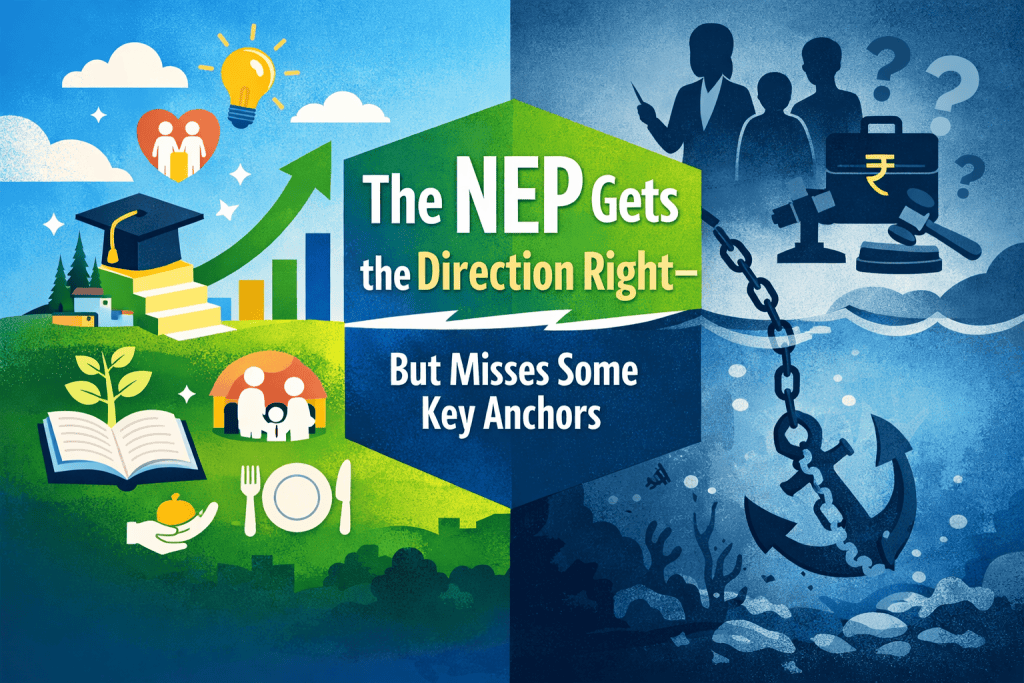
The NEP Gets the Direction Right—But Misses Some Key Anchors

India’s National Education Policy (NEP) represents the most comprehensive rethink of education in decades. Its intent is progressive, research-backed, and necessary. If you would like to contribute to our newsletter, or join us as parent researcher or educator, please leave us a message, or write to priyanka.pointguard@gmail.com List of places parents can take their young children India’s National Education Policy (NEP) represents the most comprehensive rethink of education in decades. Its intent is progressive, research-backed, and necessary. Having attended Balvatika as a toddler and then moved to a CBSE English-medium school, I have experienced the very transitions the NEP now seeks to rationalise—care-based early learning, formal schooling, and outcome-driven education. From that lens, the policy deserves both appreciation and scrutiny. What the NEP Gets Right At its core, the NEP correctly expands the definition of education. It recognises that schooling must develop not only foundational and higher-order cognitive skills—literacy, numeracy, critical thinking, and problem-solving—but also social, ethical, and emotional capacities. The emphasis on constitutional and human values—empathy, respect, democratic spirit, pluralism, scientific temper, equality, and justice—is timely. In an increasingly fragmented society, teaching children how to think ethically, not merely what to think, is essential. The 5+3+3+4 structure and the inclusion of Early Childhood Care and Education (ECCE) from age three are among the policy’s strongest elements. Strengthening Anganwadis and focusing on foundational learning reflects global evidence: learning gaps formed early are the hardest to close later. Equally important is the recognition that children cannot learn when they are hungry, unwell, or emotionally distressed. Integrating nutrition, mental health support, counsellors, social workers, and community participation reframes schools as care ecosystems rather than exam factories. Assessment reform is another welcome shift. Redesigning Board exams to reduce rote learning, allow subject choice, enable multiple attempts, and test core competencies—rather than coaching endurance—addresses one of India’s most damaging educational distortions. Finally, the move toward multidisciplinary education, even within elite technical institutions such as the IITs, signals an understanding that technical excellence without ethical and social grounding is incomplete. Where the NEP Falls Short Despite its breadth, the NEP underplays several forces that shape children’s daily realities. First, while teachers are the centre-most and the strongest pillar of the education system, the policy needs to see this essential role with some humility because teachers are human, make mistakes, sometimes lethal, dangerous and harmful to children. Some guardrails are needed to ensure teachers’ own behaviour is appropriate. Second, the absence of structured parental involvement is notable. Education does not operate in isolation from families. Values, emotional regulation, discipline, digital habits, and attitudes toward learning are shaped as much at home as at school. Without aligning parents and schools, children receive fragmented moral and behavioural cues. Third, while constitutional values are emphasised, family values and everyday ethics—care, responsibility, boundaries, conflict resolution, and intergenerational respect—remain implicit rather than intentional. In a rapidly changing social fabric, these can no longer be assumed. The policy also misses an opportunity to introduce basic legal and civic literacy. Understanding everyday rules and laws such as traffic rules, rights, duties, contracts, and digital responsibilities is essential for functional citizenship. Finally, entrepreneurship and economic agency receive insufficient attention. In a country where formal employment cannot absorb all talent, children must be exposed early to problem-solving, value creation, financial literacy, and ethical enterprise. A Necessary, But Incomplete, Reform The NEP sets the right direction. It humanises education, broadens success beyond marks, and aligns India with global developmental thinking. To fully deliver on its promise, the NEP must look at family-school-community as its own system, practical life skills, and economic agency. Meanwhile, let’s continue to follow and monitor existing policy implementation as a step forward. If you would like to contribute to our newsletter, or join us as parent researcher or educator, please leave us a message, or write to priyanka.pointguard@gmail.com Follow Priyanka Agrawal on LinkedIn: http://www.linkedin.com/comm/mynetwork/discovery-see-all?usecase=PEOPLE_FOLLOWS&followMember=pagrawal1 Subscribe to Point Guard’s newsletter: https://www.linkedin.com/build-relation/newsletter-follow?entityUrn=7418911870050488320 Leave feedback in comments section.

The NEP Gets the Direction Right—But Misses Some Key Anchors Read More »

Children are learning through seeing, hearing, touching, moving, and experiencing the world alongside trusted adults.

Where Indian Parents Can Take Young Children for Exploration, Fun, and Healthy Development

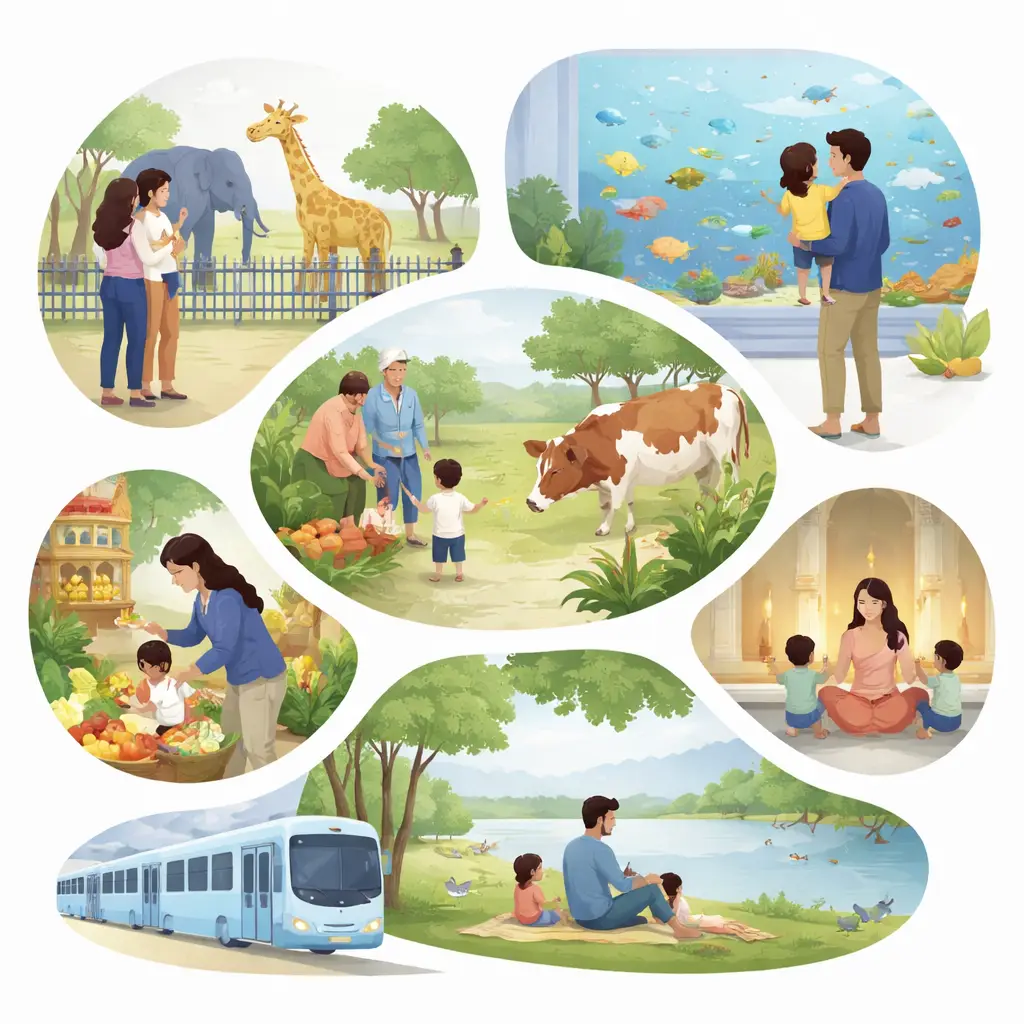
In the first four years of life, children are not learning through worksheets or instructions. They are learning through seeing, hearing, touching, moving, and experiencing the world alongside trusted adults. Everyday places offer rich, natural learning opportunities, often more powerful than formal “activities”. The good news? You don’t need expensive classes or elaborate plans. Here are some places parents can take young children—and how each supports growth and development. If you would like to contribute to our newsletter, or join us as parent researcher or educator, please leave us a message, or write to priyanka.pointguard@gmail.com List of places parents can take their young children 1. Zoo and Aquarium Visits: Curiosity, Language, and Wonder Zoos and aquariums remain wonderful first experiences for young children. In Indian zoos especially, children: Short, unhurried visits work best. 2. Sabzi Mandi, Fish Market, or Local Bazaar: Sensory and Cognitive Development A sabzi mandi may not look like a “learning space” to adults, but for toddlers, it is a sensory explosion. Children experience: Holding a tomato, touching bhindi, or watching vendors weigh vegetables builds real-world understanding that no toy can replace. 3. Malls and Children’s Play Areas: Movement and Social Exposure Malls often provide clean, safe spaces for families, especially in cities. These environments help children: Even walking through a mall, pressing lift buttons, or watching escalators can be fascinating learning moments. 4. Farms, Gaushalas, Village Visits, and Farmhouses: Grounding Experiences If you have access to farms, village homes, or even gaushalas, these are priceless for young children. They support: These experiences often stay with children far longer than structured play sessions. 5. Bus, Metro, and Train Journeys: Everyday Adventures Indian public transport is full of movement, sound, and human interaction. For young children, short journeys: A window seat on a train or crossing the road can be as enriching as a toy store. 6. Parks, Lakes, Beaches, and Open Grounds: Emotional and Physical Balance Natural outdoor spaces are essential for early childhood development. They help children: Regular park visits act as emotional “reset buttons”. 7. Spiritual and Community Places: Learning Stillness and Community Quiet spiritual and community spaces offer a very different kind of learning. Young children: There is no need for discipline: gentle exposure itself is valuable. 8. Family Functions, Weddings, and Festivals: Social and Emotional Learning Indian family gatherings are rich social classrooms. Children learn: What Truly Supports Growth, Beyond the Location Across all these places, what matters most is how adults show up. Children benefit when parents: Children don’t need constant entertainment. They need connection, repetition, and safety. In Closing For children under four, learning does not require specialised environments. It happens in sabzi mandis, parks, buses, temples, farms, and family spaces, when adults allow children to experience the world at their pace. Sometimes, the most ordinary places create the strongest foundations for curiosity, emotional security, and lifelong learning. If you would like to contribute to our newsletter, or join us as parent researcher or educator, please leave us a message, or write to priyanka.pointguard@gmail.com Follow Priyanka Agrawal on LinkedIn: http://www.linkedin.com/comm/mynetwork/discovery-see-all?usecase=PEOPLE_FOLLOWS&followMember=pagrawal1 Subscribe to Point Guard’s newsletter: https://www.linkedin.com/build-relation/newsletter-follow?entityUrn=7418911870050488320 Leave feedback in comments section.

Where Indian Parents Can Take Young Children for Exploration, Fun, and Healthy Development Read More »

Empty nest syndrome among parents of adult children

Empty Nest Syndrome: When parenting takes a back seat and confuses children

This is not my story, but story of many parents who find a new routine, new meanings, and new goals in the second half of their lives, handling what psychologists call the empty nest syndrome. If you would like to contribute to our newsletter, or join us as parent researcher or educator, please leave us a message, or write to priyanka.pointguard@gmail.com When I moved out, I assumed my parents’ lives would continue as they always had, steady and predictable. What I didn’t expect was how empty their days would become. Not dramatic or visibly sad, just quietly unoccupied. Mornings stretched without urgency. Afternoons blended into television noise. Evenings arrived with nothing particular to anticipate. They didn’t have much to talk about with each other. Conversations turned practical, meals, bills, errands. Often they sat in the same room, scrolling on their phones or watching the news, both present yet disconnected. It unsettled me. This was a couple that had once discussed my schoolwork, my worries, and my future at length. Without that shared focus, there seemed to be no clear centre to their conversations. Over time, their social world began to shrink. Friends moved closer to their children. Relatives grew busy with their own responsibilities, jobs, health issues, growing families. Calls became infrequent, visits rarer. Everyone appeared to be settling into their own lives, facing private challenges. My parents didn’t complain, but the absence was noticeable. The days needed filling. Initially, they tried familiar ways of staying occupied, rearranging cupboards, rewatching old serials, debating the same news stories every night. These activities passed time but didn’t bring much satisfaction. The emptiness remained. Gradually, something shifted. My mother started attending early morning yoga sessions nearby. My father joined her for walks and stayed back to listen. They spoke little about it at first, only mentioned feeling calmer and more rested. Slowly, spirituality became part of their routine, not as withdrawal, but as structure. Mornings gained purpose, and silence felt less heavy. With this inner stillness came a new interest in the world around them. They began talking about people beyond the family, children lacking guidance, women with limited opportunities, elders living alone. My mother volunteered to teach at a local centre. My father helped organise small community activities. Their conversations changed, becoming less repetitive and more outward-looking. I noticed how their days filled quietly, meaningfully. They returned home tired but content. The house felt steadier. The emptiness hadn’t disappeared, but it no longer dominated them. It had turned into space. Watching this, I realised that when parenting stopped being their central role, they didn’t need distraction, they needed direction. Through spirituality, dhyan, and service, my parents found a way to move forward, reshaping their days with purpose, contribution, and a renewed sense of belonging. This is not my story, but story of many parents who find a new routine, new meanings, and new goals in the second half of their lives, handling what psychologists call the empty nest syndrome. If you would like to contribute to our newsletter, or join us as parent researcher or educator, please leave us a message, or write to priyanka.pointguard@gmail.com Follow Priyanka Agrawal on LinkedIn: http://www.linkedin.com/comm/mynetwork/discovery-see-all?usecase=PEOPLE_FOLLOWS&followMember=pagrawal1 Subscribe to Point Guard’s newsletter: https://www.linkedin.com/build-relation/newsletter-follow?entityUrn=7418911870050488320 Leave feedback in comments section.

Empty Nest Syndrome: When parenting takes a back seat and confuses children Read More »

Social, cognitive, and emotional development in children

Why Do Children Play Rock Paper Scissors? Surprising Cognitive and Social Benefits

Social, cognitive, and emotional developmental needs of children can be met through play, careful interactions, and courses If you would like to contribute to our newsletter, or join us as parent researcher or educator, please leave us a message, or write to priyanka.pointguard@gmail.com Children play Rock–Paper–Scissors because it meets several social, cognitive, and emotional developmental needs at once. Here’s what’s really happening beneath the surface: 1️⃣ It Solves Conflict Quickly Children constantly face small power struggles: Rock–Paper–Scissors gives them a neutral, fair system to resolve disagreements without adult intervention. Rock can beat scissors, scissors can beat paper, and paper can beat rock. It reduces arguments because: This supports early conflict-resolution skills. 2️⃣ It Teaches Fairness & Turn-Taking Children are deeply sensitive to fairness. This game: Learning to lose safely is a huge emotional milestone. 3️⃣ It Builds Cognitive Skills Even though it looks simple, the game activates: Older children start noticing tendencies: It becomes a mini introduction to strategy and probability. 4️⃣ It Encourages Social Bonding Children love synchronized rituals: “1… 2… 3… SHOOT!” The rhythm and predictability create: It works across language and cultural barriers. 5️⃣ It Feels Empowering Unlike many parts of childhood (school rules, adult decisions), this game gives children: That sense of agency is deeply satisfying. 6️⃣ It Is Low-Risk Competition Competition without humiliation. This makes it emotionally safe. If we look at it psychologically, Rock–Paper–Scissors is more than a game. It is: If you would like to contribute to our newsletter, or join us as parent researcher or educator, please leave us a message, or write to priyanka.pointguard@gmail.com Follow Priyanka Agrawal on LinkedIn: http://www.linkedin.com/comm/mynetwork/discovery-see-all?usecase=PEOPLE_FOLLOWS&followMember=pagrawal1 Subscribe to Point Guard’s newsletter: https://www.linkedin.com/build-relation/newsletter-follow?entityUrn=7418911870050488320 Leave feedback in comments section.

Why Do Children Play Rock Paper Scissors? Surprising Cognitive and Social Benefits Read More »

The Role of Grandparents in a Child’s Life: Roots That Strengthen Wings

Grandparents can help develop empathy and resilience If you would like to contribute to our newsletter, or join us as parent researcher or educator, please leave us a message, or write to priyanka.pointguard@gmail.com In today’s fast, achievement-driven world, children are surrounded by information, screens, and expectations. But what often anchors them emotionally is the steady presence of grandparents. Grandparents are not just “extended family.” They are emotional shock absorbers, storytellers, identity keepers, and often the anchors in a child’s life. ❤️ 1. Emotional Security: The Safe Harbour Grandparents typically bring patience that parents, juggling careers and responsibilities, may struggle to sustain every day. With grandparents: A grandparent’s love often feels unconditional because it is about presence. For children navigating academic pressure and social complexity, this emotional cushion is invaluable. At the same time, giving space to children to grow as per their generation while instilling family’s value system is important part of grandparents’ role. 📖 2. Carriers of Family Stories & Identity Grandparents connect children to: When a grandparent shares how they overcame hardship, built something from scratch, or made difficult life choices, children absorb something powerful: perspective. Grandparents model long-term thinking and endurance. 🧠 3. Emotional Regulation & Perspective Grandparents have lived through: This life experience often makes them calmer responders to children’s emotional storms. When a child fails an exam or fights with a friend, a grandparent may say: “This too shall pass.” That steadiness teaches children emotional regulation without formal “lessons”. 🌱 4. Building Confidence Without Pressure Parents often understandably operate from responsibility: “Did you finish your homework?” “Did you practice?” “Are you prepared?” Grandparents, on the other hand, can focus on: This balance is important. Children need ambition but they also need affirmation and connection separate from achievement. 🏡 5. The Village Effect in Modern Times In urban nuclear families, especially in cities where both parents work, grandparents often become: Even when they live separately, regular calls or visits create continuity in a child’s life. Research consistently shows that children with involved grandparents tend to: ⚖️ 6. Navigating Boundaries: A Modern Reality Of course, intergenerational dynamics are not always seamless. Different parenting styles can create friction: The key is alignment, empathy, and balance. When grandparents and parents respect each other’s roles, children benefit from both structure and softness. 💛 For Parents: How to Strengthen the Bond If you are raising children in today’s high-pressure environment, consider: These moments build memory, bonding, and identity. 🌟 Final Thought: Roots That Strengthen Wings Children need two things: Parents often build the wings. Grandparents can build the roots. In a fast-changing world, that rootedness may be one of the greatest gifts a child can receive. Leave feedback in comments section.

The Role of Grandparents in a Child’s Life: Roots That Strengthen Wings Read More »

Scroll to Top